
How an agentic marketing team works: specialists, gates, and what stays human
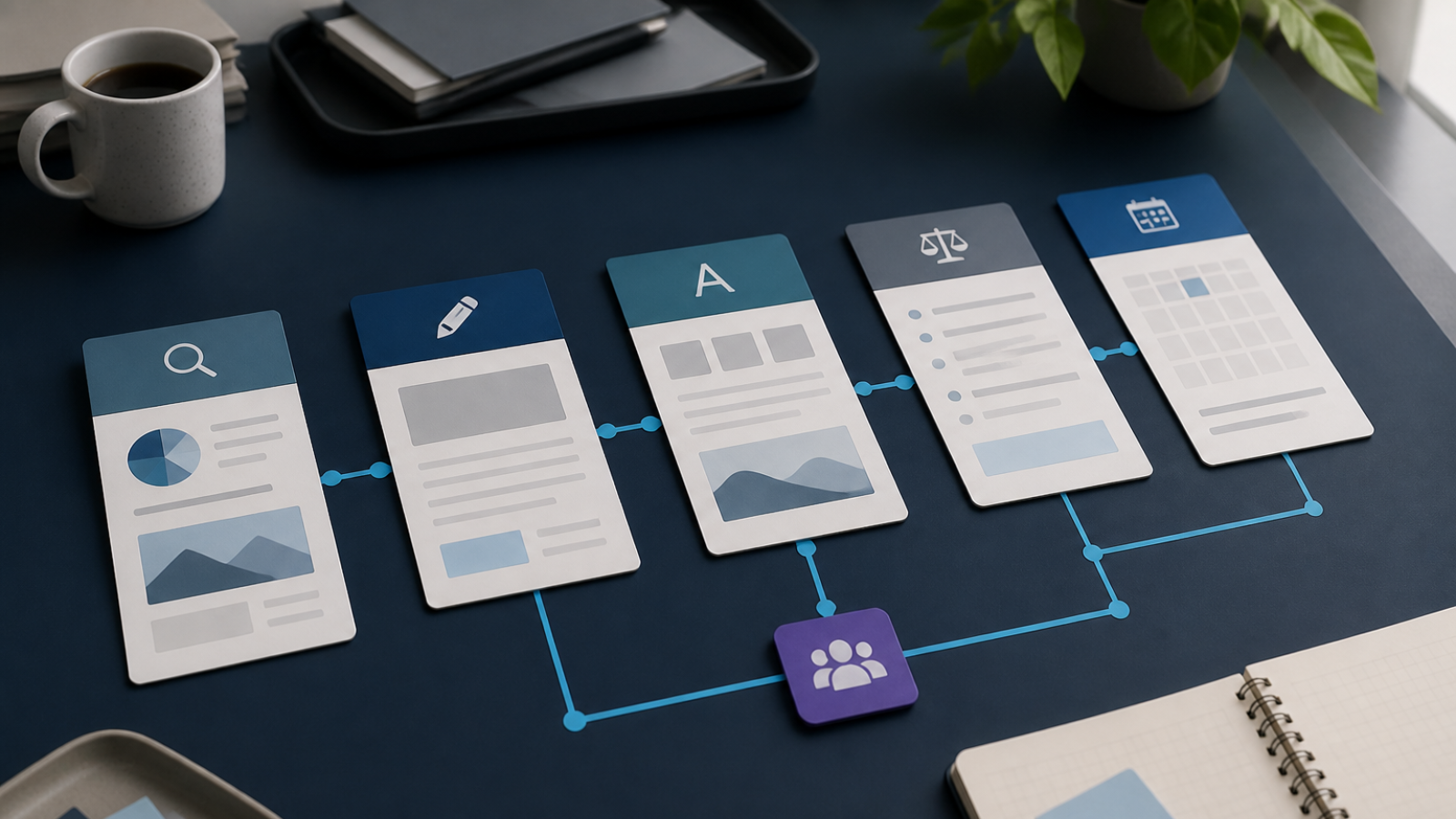
An agentic marketing team is a practical response to that capacity bottleneck. Instead of one generalist chat that tries to do everything, you run a small set of specialists with clear jobs, shared files, and hard stop lines for humans.
This post explains how Responsab's NEXUS Campaign Team is organized, what each agent owns, and what that means for operators who still need to Publish articles and post live socials themselves. Automation does not replace strategy, counsel, or judgment.
What "agentic" means here

In this setup, an agent is a specialist role with:
- A written charter (what it does and does not do).
- Inputs it must read (calendar, brand brief, editorial rules).
- Outputs in known folders or Drupal fields (drafts, prompts, approved packages).
- A gate after it (Brand, Legal, or a human).
The Campaign Team Lead orchestrates the loop. Specialists do not freestyle the whole pipeline. That separation is the point: fewer mixed messages, fewer "almost ready" drafts that still contain internal notes.
The operating loop (short version)
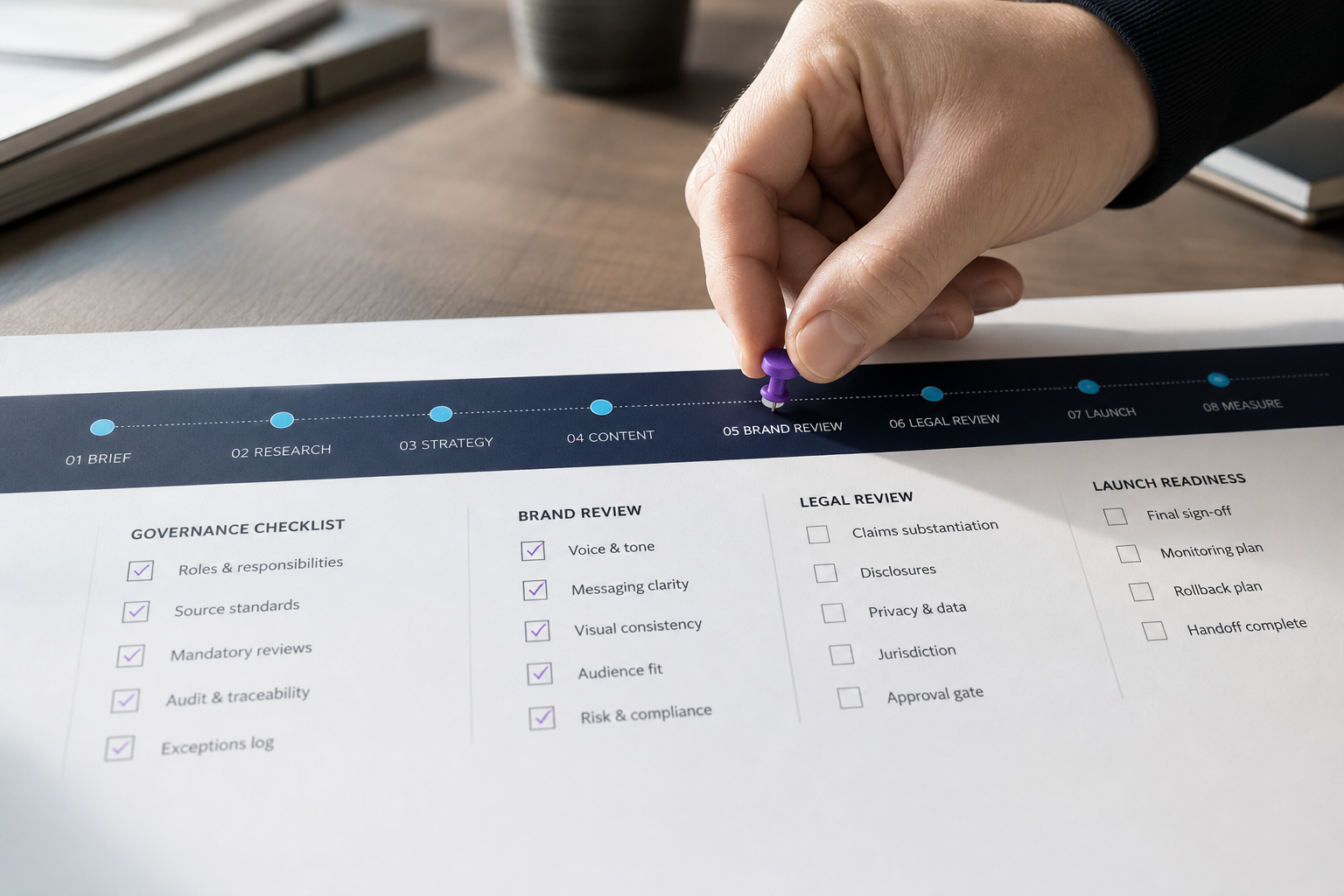
On a weekday kick (or when the Lead is started in chat):
- Trend Researcher refreshes signals when the scan is stale and helps lock titles.
- Content Creator and platform specialists fill calendar gaps (blog packages plus companions).
- Image Prompt Engineer writes visual prompts and, when image tools are available, produces draft PNGs.
- Brand Guardian and Legal review copy and visuals for voice and soft claims.
- On pass, packages move to
approved/and sync to production as unpublished Drupal nodes. - You get notified. You Publish articles when ready. You paste social copy live, then mark posts as posted.
Everything before Publish / live post is meant to run without waiting for a chat reply.
Who is on the team
Campaign Team Lead
Owns the calendar, kickoffs, handoffs, and sync to unpublished Drupal. Stops before Publish and before live social posting.
Trend Researcher
Watches mid-market CMS, accessibility, performance, and stewardship topics. Outputs a trend scan and candidate titles so drafts are not invented in a vacuum.
Content Creator
Writes blog packages and companion posts under editorial rules: real CTAs, no decorative em dashes, soft claims only.
Platform specialists
- Social Media Strategist (LinkedIn and professional framing)
- Twitter Engager (X)
- Instagram Curator, TikTok Strategist, Reddit Community Builder when those channels are on the calendar
Each formats for the channel. None invents metrics or legal conclusions.
Image Prompt Engineer
Art direction and prompts aligned to brand visuals. When Generate Image is available, also produces hero and social draft PNGs that attach to unpublished nodes.
Brand Guardian
Voice, clarity, visual consistency. Can send work back before approval.
Legal compliance (soft claims)
Flags overpromises, invented outcomes, and missing "not legal advice" language on compliance topics. Does not replace counsel.
Growth Hacker, Experiment Tracker, Analytics Reporter, Executive Summary
Optional cadence roles for experiments, KPI notes, and leadership-ready summaries. They do not bypass Brand or Legal on public copy.
How this helps a small marketing operation
Coverage without chaos. Specialists fill the next 7-14 days on a shared calendar instead of ad-hoc posts.
Fewer paste mistakes. Paste-ready social copy is the body humans copy into LinkedIn or X. Operator notes (which blog to deep-link after Publish) live in internal notes, not in the post body.
Review before publish. Brand and Legal pass into approved/ and unpublished Drupal. You still control the live switch.
Visuals that match the package. Prompts and heroes are tied to utm_content, so attach scripts can map files to the right article or social node.
Clear human lane. Agents do not Publish articles. They do not mark social as posted. They do not post to LinkedIn for you.
What stays human (on purpose)
| You do | Agents do |
|---|---|
| Publish articles in Drupal | Draft, review, sync unpublished |
| Post live to LinkedIn / X / Reddit / etc. | Write paste-ready copy + CTAs |
| Mark social as posted after you post | Schedule dates, queue, calendar |
| Final judgment on sensitive claims | Soft-claims gate before approval |
That split is intentional. Public channels and client trust still need a person.
Practical tips if you adopt a similar model
- Name the roles. "Ask the AI" is not a workflow. "Content Creator then Brand then Legal" is.
- Put gates in folders. Drafts, review, approved, published. Do not skip Brand or Legal for speed.
- Separate paste copy from operator notes. Anything that says "once Ralph publishes" or "interim CTA" belongs in internal notes.
- Schedule on a real calendar. A month grid with blogs and socials by day beats a flat spreadsheet when you are posting live.
- Keep CTAs real. Buttons and absolute links, not "CTA: /site-audit" as bare text.
If you want a calm inventory of your own publishing system (templates, journeys, CMS risk), start with a site audit.
Closing
An agentic marketing team is not magic. It is specialized labor with written contracts, shared artifacts, and human Publish / post as the last mile.
Used that way, it buys back focus: research stays research, drafts stay drafts, gates stay gates, and you spend your time on the moments that actually need a person.