
← Back to Case Studies
Education

UCLA Center for Health Policy Research

UCLA Center for Health Policy Research needed a Drupal platform that could handle research publishing, custom data experiences, and a better editorial workflow without forcing staff into brittle workarounds. Ralph led development while employed at Primacy, combining out-of-the-box Drupal patterns with custom modules built around UCLA CHPR's publishing and reporting needs.
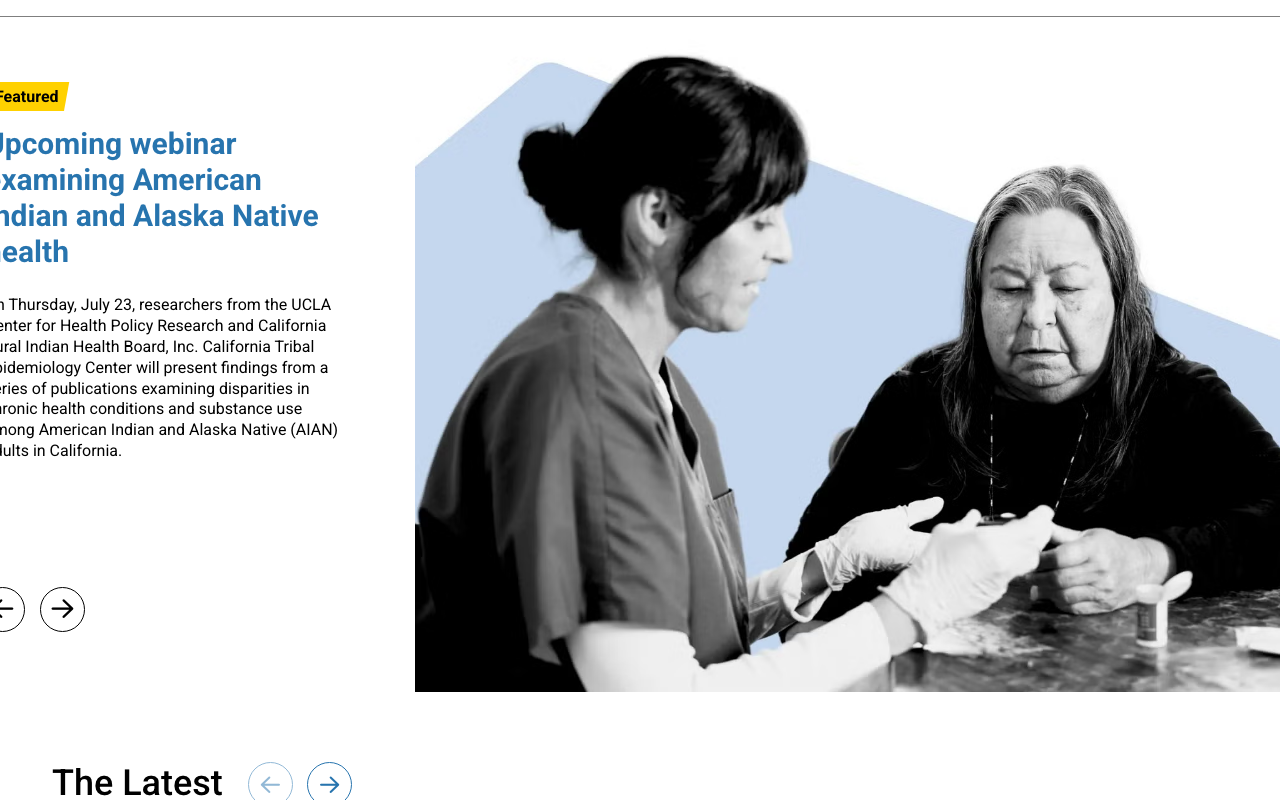
A custom Drupal platform that made research publishing, dynamic feeds, and data experiences more maintainable for UCLA CHPR.
UCLA Center for Health Policy Research website homepage
Client
UCLA Center for Health Policy Research
Duration
Multi-phase Drupal delivery at Primacy
Technology stack
  • Drupal
  • Custom Drupal modules
  • Dynamic feed architecture
  • Secure Tableau integration
  • Component-driven frontend implementation
  • Content modeling
  • Editorial workflows
  • Accessibility support

Quick client profile

Industry
Public health research
Location
Los Angeles, California
Scale
Institutional research and policy publishing
Engagement
Lead developer role at Primacy
Project Context

Why this engagement mattered

UCLA Center for Health Policy Research publishes policy research, program content, newsroom stories, and data-driven public resources for a broad audience. The site needed to do more than look current. It had to support structured publishing, flexible program pages, dynamic content feeds, and authenticated Tableau reporting experiences inside a maintainable Drupal architecture.

Ralph led development while employed at Primacy, translating approved strategy and design into a custom Drupal implementation. The build included custom modules for feed assembly, editorial workflow improvements, and secure Tableau dashboard delivery, along with reusable templates and frontend patterns that made complex content easier to manage over time.

Project Images

A closer view of the platform and delivery context

Before And After

What changed through the engagement

Before

  • Research, program, and newsroom content needed a clearer structure for public audiences.
  • Editors needed a workflow that could support recurring spotlights, feeds, and daily updates without manual duplication.
  • The platform had to balance out-of-the-box Drupal strengths with custom functionality for CHPR-specific publishing and data needs.

After

  • Structured templates made research, program, and newsroom content easier to publish consistently.
  • Custom feed tooling supported spotlight and dynamic content assemblies across the site.
  • Secure Tableau integration and backend workflow improvements gave the team a stronger long-term operating model.
Implementation Approach

How the work moved from strategy into execution

Step 1

Translate approved strategy and design into a Drupal build shaped around real editorial workflows.

Step 2

Use out-of-the-box Drupal where it fit, then extend it with custom modules for feeds, reporting, and backend usability.

Step 3

Support QA, accessibility review, and launch readiness across a multi-stakeholder university environment.

Measured Outcomes

Purpose-built Drupal modules supported dynamic feeds, workflow fixes, and CHPR-specific behavior.

Custom module delivery

Authenticated Tableau integrations extended the platform beyond standard content publishing.

Data experience support

Reusable templates and cleaner backend patterns gave the team a more dependable publishing system.

Editorial maintainability

Next Step

Ready for similar results?

Let’s discuss your goals and build a roadmap that delivers measurable outcomes with stronger messaging, cleaner systems, and a more accountable delivery process.